


Commercial parking lots show replacement need through seven signs: widespread cracking, potholes, drainage failure, faded striping, base deterioration, frequent patch repairs, and age beyond 15-25 years. Asphalt lifespan depends on traffic, climate, and maintenance history. Parking Lot Experts evaluates these factors across Colorado Springs and Denver properties before recommending repaving over continued patching.
Key Takeaways
- Asphalt parking lots last 15 to 25 years with proper maintenance and care.
- Small surface cracks spread rapidly into structural failure and drainage problems if ignored.
- Water pooling and recurring potholes signal your lot needs professional repaving assessment.
- Neglected preventative maintenance accelerates deterioration and creates liability exposure for property owners.
What Does Repaving a Parking Lot Mean?
Repaving a parking lot means major sidewalk restoration rather than a quick patch job. The term covers two distinct scopes of work: an asphalt overlay placed over the existing surface, or a full reconstruction that removes the lot down to its base layer. Property managers often use “repaving” loosely, but the actual project can range dramatically depending on how far the damage has progressed.
Understanding this distinction matters when budgeting for sidewalk work. An overlay adds a new asphalt layer on top of sound existing sidewalk, correcting surface wear without disturbing the base. Full reconstruction tears out the old material entirely and rebuilds the subgrade, base, and surface layers from scratch. The right choice depends on how deep the damage runs, not just how the surface looks.
Does every damaged lot need full repaving?
No. Many problems respond well to lighter, less expensive fixes long before repaving parking lot work becomes necessary. Crack sealing closes small surface openings before water intrusion starts, patching addresses isolated potholes, and a thin asphalt overlay can refresh a lot that still has a sound structural base. Jumping straight to reconstruction on a lot that only needs patching wastes budget that could extend the sidewalk’s useful life through targeted repair instead.
Who typically weighs this decision?
Commercial property owners, residential community managers, and municipal facility managers all face this call. Each group encounters it under different pressures. A retail property manager worries about customer safety and curb appeal. A municipal manager answers to budget cycles and public liability. Parking Lot Experts serves all three groups, offering asphalt paving, concrete paving, sealcoating, striping, crack repair, and site preparation, a range that spans minor repair through complete replacement.
How Long Should a Parking Lot Last Before Repaving?
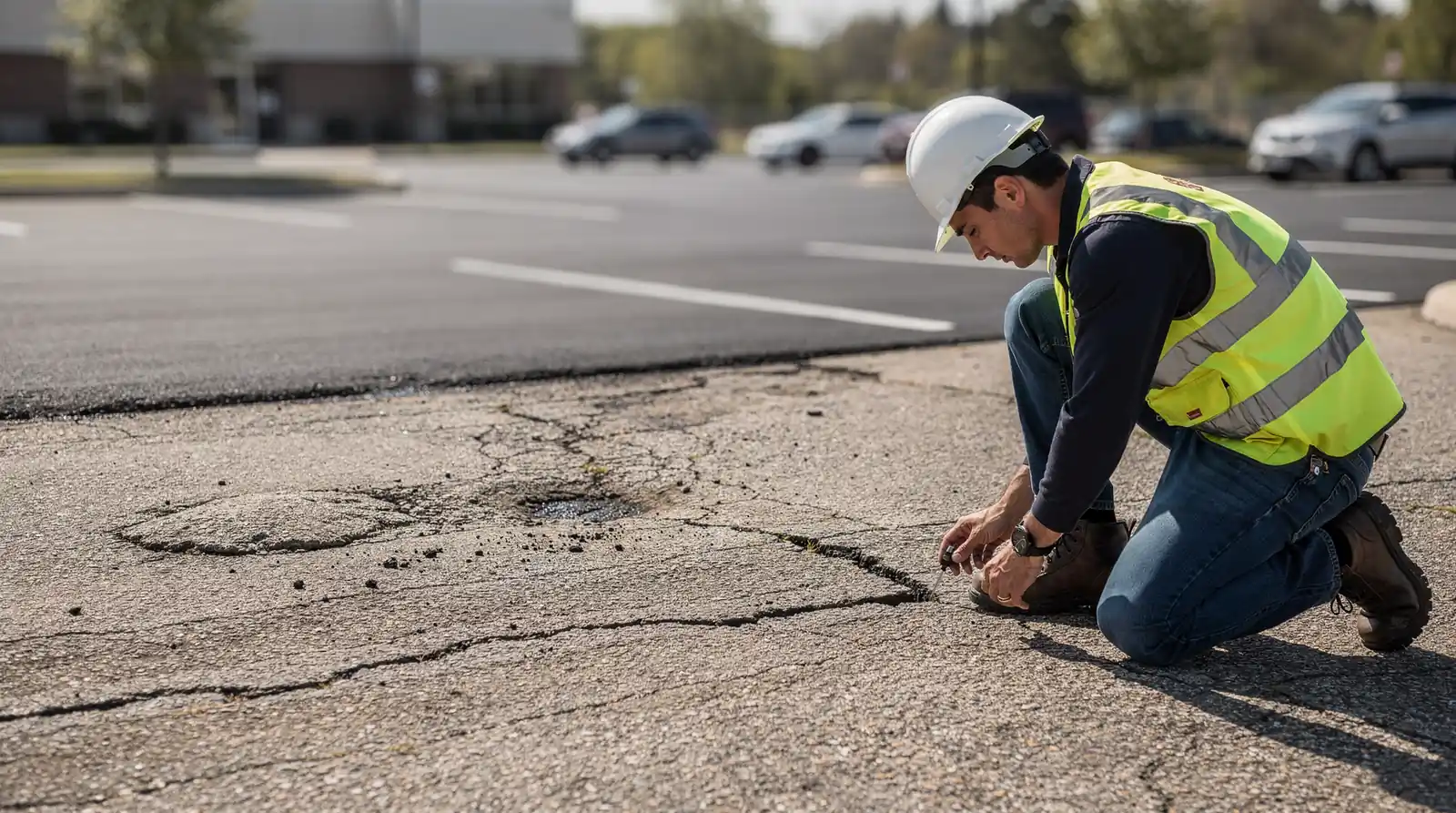
No single number answers this question. Six factors determine how long a surface holds up: traffic volume, vehicle weight, climate, drainage, sidewalk thickness, and maintenance history. A low-traffic office lot and a high-traffic retail center with heavy trucks will age at completely different rates, even with identical sidewalk thickness.
Maintenance history matters more than most property managers realize. Skipping preventative maintenance and putting off small repairs doesn’t just delay the inevitable. It shortens sidewalk life and raises the odds that a full repaving parking lot project becomes necessary sooner rather than later. A crack left unsealed today often means a deeper structural repair next season.
Does climate affect how long a parking lot lasts?
Climate plays a major role, and freeze-thaw cycles are especially hard on asphalt. Water seeps into small cracks, freezes, expands, and widens the damage with each cycle. Parking Lot Experts, based in Colorado Springs, works within exactly this kind of freeze-thaw environment. Seasonal temperature swings accelerate sidewalk aging across the region.
Why does location matter for figuring out when to repave?
Sidewalk doesn’t age the same way everywhere. Lots built for the climate and soil conditions of the Pikes Peak region face different stresses than those in flatter, less variable climates. Parking Lot Experts serves Colorado Springs, Denver, and the surrounding areas, where lifespan expectations shift depending on local climate exposure.
Property managers tracking signs parking lot needs repaving should weigh all six factors together rather than relying on age alone. A well-drained, properly maintained lot built on stable soil can outperform a thinner, poorly maintained surface by years, regardless of their coincidental installation dates.
What Causes Parking Lot Sidewalk to Fail?
Sun exposure, moisture, and constant vehicle weight break down asphalt from the surface down. Traffic loads and shifting seasonal conditions wear sidewalk faster than most property managers expect, pushing a lot toward repaving parking lot territory well before its owners anticipated. Even surfaces built to a high standard begin showing wear from sun, weather, and repeated traffic over months and years of service.
Small problems rarely stay small. A hairline crack that goes unsealed lets water seep beneath the surface. It undermines the base layer and accelerates structural breakdown. Left unchecked, that same crack can escalate into drainage failures and liability exposure if a tenant or customer trips on broken sidewalk.
Why Does Weather Damage Sidewalk So Quickly?
Temperature swings cause asphalt to expand and contract repeatedly throughout the year. That constant movement opens small cracks into larger ones. Sun exposure dries out the binding oils that keep asphalt flexible. Rain and snowmelt then exploit those cracks, driving the deterioration process further beneath the surface.
Common failure drivers include:
- Repeated freeze-thaw cycles that widen surface cracks
- Heavy or frequent vehicle traffic compressing weak spots
- Poor drainage that lets water pool and infiltrate the base
- UV exposure that dries and stiffens the asphalt binder
- Deferred maintenance that lets minor damage spread
Can Routine Maintenance Prevent Sidewalk Failure?
Preventive treatments slow deterioration considerably when applied before damage sets in. Slurry seal, a blend of asphalt emulsion, fine aggregate, and water, restores a worn surface and protects it from further sun and traffic damage. Applying a protective treatment early costs far less than full-scale reconstruction later, making prevention the more economical path for most commercial properties.
Is Widespread Cracking a Sign You Need Repaving?
Widespread cracking signals a deeper structural problem, not a cosmetic one. A handful of isolated cracks rarely means trouble; those can typically be sealed and left alone. The concern grows when cracking spreads across the entire surface rather than staying confined to one area.
What kind of cracking means repaving, not patching?
Multiple interconnected cracks, large networks of fractures, and cracks that keep returning after repair all point to damage beneath the sidewalk, not just on top of it. Cracking that reappears across the whole lot, rather than in a single spot, usually means the base layer has weakened. At that stage, surface patching only delays the inevitable.
Property managers can use a few questions to judge severity:
- Do cracks connect to form a web pattern across large sections, rather than appearing as single lines?
- Have the same cracks returned shortly after a previous repair?
- Is cracking showing up in multiple, unrelated areas of the lot rather than one isolated zone?
A “yes” to any of these suggests the damage has moved past a simple seal job.
Is patching still worth it once cracking spreads?
Once cracking becomes extensive, continued patching often costs more over time than a full resurfacing or repaving project. Repeated patch jobs treat symptoms while the underlying base keeps deteriorating, which means the next repair bill arrives sooner than the last. Commercial properties facing this pattern of recurring, spreading cracks benefit from evaluating resurfacing or full repaving parking lot work before more damage accumulates. Parking Lot Experts specializes in asphalt and concrete paving, sealcoating, striping, crack repair, and site preparation for properties at exactly this stage of deterioration, applying premium materials and professional techniques built for a consistent, long-lasting finish.
Does Standing Water Signal It’s Time to Repave?
Standing water points to a drainage failure, not a cosmetic flaw. Pooling that lingers after rainfall means the sidewalk has lost its slope or its surface integrity, and that failure compounds fast. Water sitting where it shouldn’t, paired with potholes that return after patching, marks the end of a workable repair cycle. At that stage, surface-level fixes stop holding, and property managers face a decision about repaving parking lot surfaces rather than continuing to chase symptoms.
Why Does Water Pooling Matter So Much?
Water that collects on asphalt doesn’t stay on the surface for long. It works downward through cracks and joints, softening the base layers that support vehicle weight. Once that base weakens, potholes and alligator cracking follow, often in the same spots where water pooled before. Recurring damage in identical locations is one of the clearest signs parking lot needs repaving. It shows the problem originates below the surface.
Not every standing-water issue demands full reconstruction, though. A correctly applied surface treatment restores a smooth, durable, skid-resistant finish and brings back both drainage performance and appearance. Slurry seal, for example, blends asphalt emulsion, fine aggregate, and water into a mixture spread evenly across the lot. Applied before water damage reaches the base, this treatment renews the surface and buys the sidewalk additional years of service.
When Does Pooling Mean It’s Too Late for Surface Treatment?
Isolated pooling after a single storm rarely requires repaving. Chronic pooling across multiple seasons, especially alongside cracking and pothole recurrence, signals deeper structural loss. The table below outlines the difference:
| Condition | Likely Response |
|---|---|
| Occasional pooling, no cracking | Monitor, consider seal treatment |
| Pooling plus recurring potholes | Evaluate base damage, likely repave |
| Pooling across large sections | Full repaving parking lot scope |
Local climate knowledge shapes these decisions. A contractor familiar with Colorado Springs’ freeze-thaw cycles. Soil behavior, such as Parking Lot Experts, recognizes drainage failure earlier than a generalist crew, helping property managers catch problems before small pools become structural collapses.
Do Recurring Potholes Mean It’s Replacement Time?
Repeated potholes signal base failure, not surface wear, and base failure ranks among the clearest parking lot replacement signs property managers encounter. A single pothole, patched once and gone for good, rarely points to anything serious. The pattern changes everything once the same spot opens up again after repair. New craters appear nearby within a season.
Staying in a repair cycle feels reasonable when each individual pothole looks manageable on its own. Crews patch, the surface holds for a few months, then the sidewalk gives way again in the same location. That cycle drains maintenance budgets without solving the underlying problem. It’s one of the most common signs parking lot needs repaving gets delayed longer than it should be.
What Causes Potholes to Keep Coming Back?
Water working beneath the asphalt layer, combined with freeze-thaw cycles, breaks down the compacted base that holds the surface in place. Patching addresses the hole, not the saturated or shifting material underneath. Until the base stabilizes, new failures keep surfacing nearby.
Commercial, residential, and municipal properties all depend on that base holding firm. Across El Paso, Teller, Douglas, Arapahoe, and Denver counties, seasonal freeze-thaw activity makes base failure a recurring concern rather than an isolated event.
Patch, Seal, or Repave: How to Decide
| Situation | Likely Fix |
|---|---|
| Isolated pothole, no return after patch | Patch repair |
| Surface wear before cracks reach the base | Slurry seal or sealcoat |
| Recurring potholes in the same spots | Repaving parking lot sections or full replacement |
Slurry seal applications, designed to extend an asphalt lot’s life, performance, and appearance, work best applied before pothole damage reaches the base. Once potholes keep returning, that window has likely closed, and when to repave parking lot sections becomes the real question to answer.
What Other Parking Lot Replacement Signs Matter?
Beyond cracking and potholes, cost timing ranks among the clearest parking lot replacement signs property managers encounter. Properties save the most money over the long run by repaving at the right moment, neither too early nor too late. Spending on reconstruction too soon wastes budget; waiting too long turns a manageable repair into full-scale rebuilding.
How Does Timing Affect Repaving Costs?
Timing determines whether a property manager pays for a targeted fix or a complete overhaul. Acting early, before damage spreads below the surface, often allows resurfacing or sealcoating to restore the lot’s condition. These treatments renew the worn surface, sharpen its appearance, and extend sidewalk life without triggering a full tear-out.
Property value sits quietly behind every sidewalk decision. A professionally maintained parking surface shapes how a property looks, how it functions day to day, and ultimately what it’s worth. Deterioration left unaddressed chips away at all three, often before anyone schedules a formal inspection.
Does Location Change When Repaving Makes Sense?
Climate and regional wear patterns shift replacement timelines from one market to another. Parking Lot Experts serves properties across Colorado Springs, Manitou Springs, Fountain, Monument, Woodland Park, Castle Rock, and Denver. Seasonal freeze-thaw cycles and traffic loads create comparable aging patterns across commercial lots. Facility managers overseeing multiple sites in these areas tend to see similar replacement windows emerge, even when individual properties look different on the surface.
Evaluating these signs across a portfolio gets complicated fast. Larger organizations managing several properties often need a broader framework for sequencing repairs versus full replacement. National consulting services focused on parking lot asset management. ADA compliance exist specifically to help property managers compare options site by site, rather than guessing at timing one lot at a time.
Taken together, the signs worth tracking include:
- Cost trajectory: repair expenses climbing faster than the lot’s remaining useful life justifies
- Appearance decline: fading, staining, or surface roughness that affects tenant or customer impressions
- Functional strain: drainage, striping, or surface issues that interfere with daily parking operations
- Portfolio inconsistency: one property aging faster than comparable sites nearby
No single sign confirms the need for replacement on its own. Reviewing cost, appearance, and function together gives property managers a clearer, more defensible basis for the decision.
How Do You Know When to Repave?
Three conditions separate a repair job from a full replacement. Damage spreads beyond isolated spots, water works its way beneath the surface, and patch repairs stop holding up. When those three signs appear together, repaving a parking lot stops being optional and becomes the responsible next step for protecting the sidewalk structure underneath.
Property managers often delay this decision, hoping one more overlay will buy time. But once water has infiltrated the base layer, surface fixes only mask a structural problem that keeps growing underneath.
What’s the difference between a repair and a full replacement?
Repairs address surface-level damage: a crack here, a soft spot there. Full replacement addresses the base, the layer beneath the asphalt that supports everything above it. If the base has failed, no amount of surface patching solves the underlying issue.
How do you spot parking lot replacement signs early?
Watch for patches that fail repeatedly in the same location. That pattern often signals the damage has moved past the surface. Standing water after rain, rather than draining within a reasonable window, also points to a deeper grading or base problem rather than a simple crack.
Maintaining a property’s appearance, safety, and functionality starts with addressing sidewalk condition before deterioration forces a larger, costlier replacement. Knowing when to repave a parking lot means watching for these compounding failures rather than waiting for a single dramatic event.
FAQ
Does every damaged lot need full repaving?
No. Crack sealing, patching, and asphalt overlays fix many issues before a full reconstruction becomes necessary, especially when the structural base remains sound.
What’s the difference between an overlay and reconstruction?
An overlay adds new asphalt over sound existing sidewalk. Full reconstruction removes the lot down to its base and rebuilds the subgrade, base, and surface layers.
How long does a parking lot last before needing repaving?
Asphalt typically lasts 15 to 25 years, but traffic volume, vehicle weight, climate, drainage, sidewalk thickness, and maintenance history all affect the actual lifespan.
Conclusion
In closing, recognizing these critical signs protects your investment and ensures your parking lot remains safe, functional, and visually professional. Delaying necessary repaving compounds damage, increases repair costs, and compromises the experience of your clients and visitors. When you identify any of these warning indicators, the time to act is now. Parking Lot Experts brings proven expertise. Local knowledge to deliver durable, cost-effective sidewalk solutions tailored to your property’s specific needs. Contact us today to schedule a professional assessment and take the first step toward a restored parking lot.
For property managers weighing inspection findings against replacement timing, Parking Lot Experts is available Monday through Friday, 8 a.m. to 4 p.m., by phone at 719-465-6690 for guidance on evaluating these signs a parking lot needs repaving.

