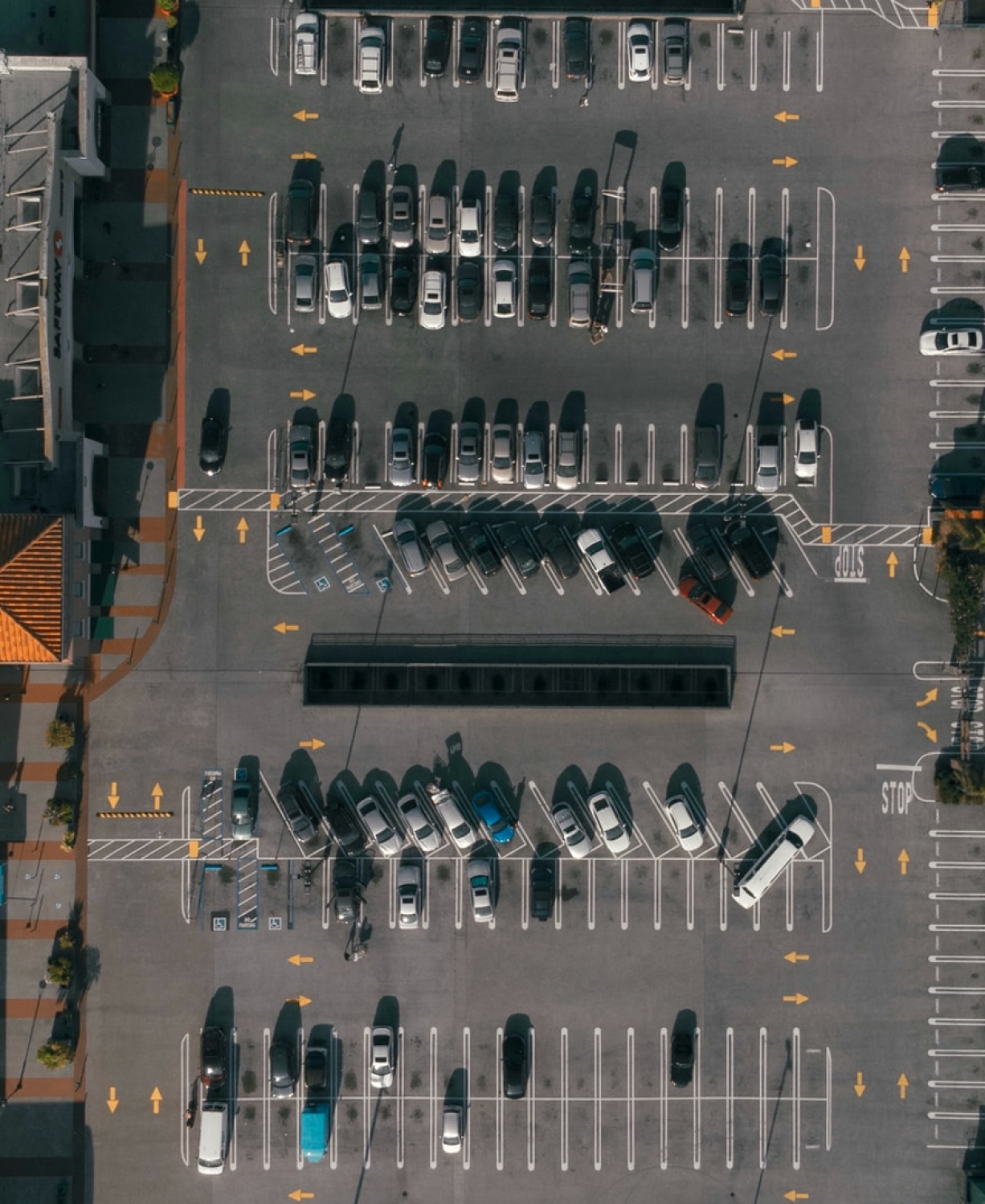

Concrete resurfacing restores surface-level damage like spalling or discoloration without slab removal, making it ideal for structurally sound concrete. Full slab replacement is necessary when cracks extend through the slab or settlement has occurred. Parking Lot Experts evaluates both layers before recommending either path.
Key Takeaways
- Resurfacing costs 40 to 60 percent of replacement and delivers a 10 to 20 year service life.
- Full slab replacement is necessary when panels sit at different heights or cracks show a height difference.
- Cracks that keep reopening after professional repair confirm an unstable foundation requiring replacement.
- Replacement offers a 30 to 50 year service life and eliminates the root cause of base failure.
What Is Concrete Resurfacing and Slab Replacement?
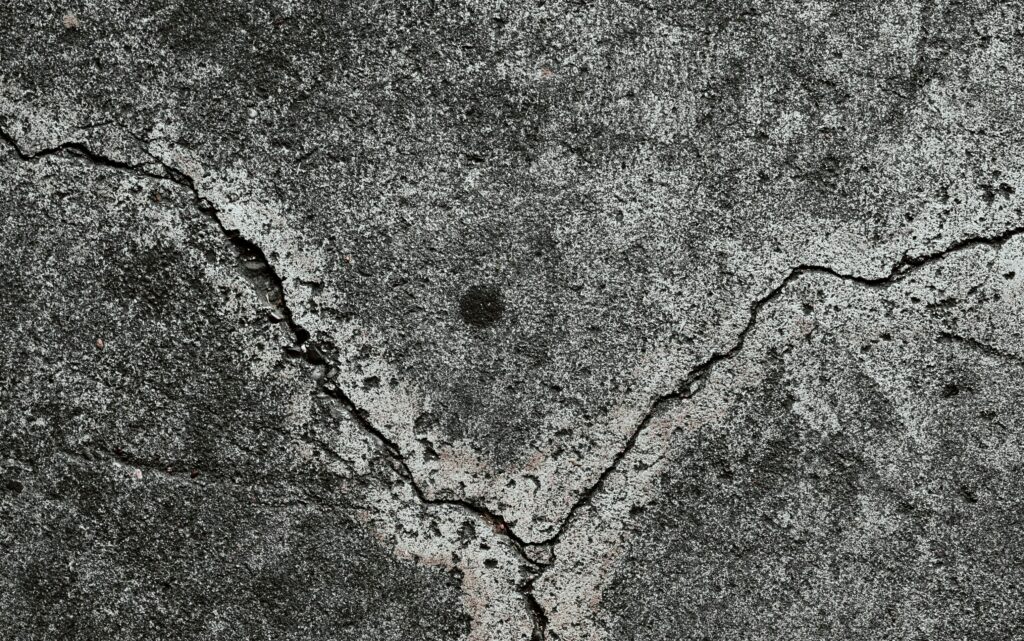
Concrete resurfacing applies a new, specially formulated cement-based material over an existing concrete surface. Concrete slab replacement removes and rebuilds the entire concrete section, addressing structural issues beneath the surface. These two approaches solve fundamentally different problems. Property managers who confuse them risk wasting budget on a surface fix when the base has already failed.
Resurfacing works when the slab beneath remains structurally sound. The process restores a worn surface without removing and rebuilding the entire slab. Resurfacing typically costs 40 to 60 percent of replacement and delivers a service life of 10 to 20 years. Full replacement becomes necessary when the concrete has lost support underneath. Panels at different heights, cracks with a height difference across them, or cracks that keep reopening after repair all signal base failure. Replacement offers a 30 to 50 year service life.
How Does Concrete Resurfacing Work?
A thin, polymer-modified overlay bonds to the cleaned and profiled existing slab. The new layer hides scaling, staining, and fine static cracks. Parking Lot Experts serves commercial, residential, and municipal clients. Parking Lot Experts provides professional parking lot maintenance, repair, and striping services dedicated to safety, functionality, and quality workmanship.
When Does a Slab Need Full Replacement Instead?
Replacement is the only option when the subgrade has shifted or eroded. Surface treatments cannot fix a base problem. The decision hinges on one test: whether the concrete has lost support underneath. Commercial concrete repair vs replacement evaluations start with that question. Ignoring base failure leads to repeated patchwork and escalating long-term costs. A new slab, properly poured on stable, compacted soil, eliminates the root cause rather than masking symptoms.
When Should You Resurface Concrete Instead of Replace?
Concrete resurfacing suits surfaces where damage stays in the top layer. The slab beneath must remain structurally sound. Scaling, staining, worn finish, and fine static cracks all qualify as surface-level problems. These conditions respond well to a new overlay without disturbing the base.
The decision hinges on one test: has the concrete lost support underneath? Panels sitting at different heights signal base movement. Cracks with a height difference across them signal the same. Cracks that keep reopening after repair confirm an unstable foundation. Surface treatments cannot fix a base problem. Property managers who ignore this distinction waste budget on a cosmetic fix that fails within months.
What Types of Damage Make Concrete a Good Resurfacing Candidate?
Fine static cracks that do not move qualify. Scaling, where the surface flakes away in thin layers, also qualifies. Staining and a worn finish fall into the same category. Each of these conditions leaves the slab’s structural integrity intact.
How Does Resurfacing Compare to Repair for Minor Damage?
Concrete repair is often the most straightforward and cost-effective way to resolve minor damage and trip hazards. Small cracks and localized spalling respond well to targeted patching. Resurfacing becomes the better choice when damage spreads across a wider area. The surface condition, not the base condition, drives that decision.
| Condition | Resurface | Replace |
|---|---|---|
| Scaling or staining | Yes | No |
| Fine static cracks | Yes | No |
| Panels at different heights | No | Yes |
| Cracks with height difference | No | Yes |
| Cracks that reopen after repair | No | Yes |
For commercial concrete repair vs replacement decisions, the base condition remains the deciding factor. A stable slab with surface wear supports resurfacing. A moving base demands full replacement.
What Are the Signs You Need Full Slab Replacement?
Full slab replacement becomes necessary when the concrete’s supporting base has failed. Surface-level repairs cannot fix a foundation that has shifted, settled, or eroded. Property managers and facility managers face a clear diagnostic test: determine whether the concrete has lost support underneath. If the base is compromised, replacement is the only durable solution.
The most definitive warning sign involves panels sitting at different heights. When adjacent slabs no longer align, the ground beneath has moved. This condition creates trip hazards and indicates structural failure beyond what patching can address. Commercial concrete repair vs replacement decisions hinge on this vertical displacement. A slab that has tilted or sunk requires removal and re-pouring over a properly compacted base.
What Does a Height Difference Across a Crack Indicate?
A crack with one side higher than the other signals base movement. This differential settlement means the soil support has shifted unevenly. No surface treatment can re-level a slab once the foundation has failed.
Cracks that keep reopening after professional repair point to the same underlying problem. The recurring damage confirms ongoing movement below the surface. Concrete spalling repair Colorado Springs services address surface deterioration effectively, but spalling accompanied by reemerging cracks often masks deeper base failure. The repair material bonds to the concrete, yet the slab continues shifting, breaking the bond repeatedly.
Parking Lot Experts serves Colorado Springs, Denver, and the surrounding areas. For property managers noticing these structural red flags, a parking lot repaving assessment identifies whether full-depth replacement is warranted.
How Do Freeze-Thaw Cycles Accelerate Base Failure?
Water penetrates cracks, freezes, and expands, widening gaps with each cycle. This process gradually undermines the soil support beneath the slab. Over multiple winters, the base compacts unevenly, creating the height differentials that demand replacement.
The cost of delaying replacement compounds quickly. A shifting slab damages adjacent panels, spreads drainage problems, and increases liability exposure. Concrete resurfacing Colorado Springs applications work well for worn surfaces on stable bases. When the base has moved, however, resurfacing merely conceals the structural defect temporarily. The concrete resurfacing cost per square foot runs 40 to 60 percent of replacement, but that savings disappears if the underlying support continues to fail.
How Does Concrete Spalling Affect Repair Decisions?
Concrete spalling describes surface flaking, chipping, or peeling that exposes the coarse aggregate beneath. Spalling determines whether a slab needs resurfacing or full replacement. The critical factor is structural integrity. Surface-level spalling on an otherwise sound slab allows for cost-effective resurfacing. Deep spalling that compromises the slab’s load-bearing capacity forces a complete tear-out.
What Causes Concrete Spalling on Commercial Properties?
Spalling often results from moisture intrusion and freeze-thaw cycles. Water penetrates the concrete surface, freezes, and expands. This internal pressure fractures the top layer. Deicing chemicals accelerate the process. Heavy vehicle traffic then breaks the weakened surface apart. The damage looks worse than it often is. A structural assessment reveals whether the base remains stable.
When Is Spalling a Surface Problem Versus a Structural Failure?
The distinction hinges on depth and slab movement. Surface spalling affects only the top quarter-inch to half-inch of concrete. The slab stays level and fully supported by its base. Concrete spalling repair Colorado Springs professionals address this with small patches or a bonded resurfacing overlay. Structural failure presents differently. Cracks show vertical displacement between adjacent sections. Panels settle or rock under load. These symptoms indicate base failure. No surface treatment corrects a moving slab.
Parking Lot Experts provides crack repair and site preparation services to address spalling and other surface issues in Colorado Springs. The company evaluates whether the underlying base has shifted before recommending a repair path. Small patches for spalling or surface breaks represent typical concrete repair methods for non-structural damage. A property manager who delays action risks losing the slab entirely. Unchecked spalling widens, traps more moisture, and accelerates deterioration. The repair window closes once base movement begins. At that stage, a parking lot renovation involving reconstruction becomes the only viable option.
What Is the Concrete Resurfacing Cost per Square Foot?
Concrete resurfacing cost per square foot varies by project scope and regional factors. The most reliable budgeting benchmark compares resurfacing to full replacement. Resurfacing typically costs 40 to 60 percent of the price of tearing out and repouring the same slab. That ratio holds across most commercial properties. A facility manager evaluating a worn loading dock or a cracked entry plaza can expect resurfacing to preserve the majority of the budget that a full replacement would consume.
The final per-square-foot figure shifts with surface condition, square footage, and local material rates. A small, heavily damaged area often carries a higher unit cost than a large, uniformly worn expanse. Site access and preparation also influence the total. These variables make a fixed national price unreliable. Instead, the 40-to-60-percent rule provides a stable planning number before a site evaluation.
What Determines Whether Resurfacing Is Even an Option?
The condition of the base slab is the deciding factor. Surface treatments cannot fix a base problem. If the underlying concrete has settled, shifted, or lost support, resurfacing will fail. Cracks with a height difference across them or panels sitting at different elevations signal base failure. In those cases, replacement becomes the only viable path. When the slab is sound and damage is confined to the surface, resurfacing delivers a durable result at a fraction of replacement cost.
How Do Colorado Springs Conditions Affect Resurfacing Costs?
Freeze-thaw cycles, deicing chemicals, and intense sun accelerate surface wear across the Front Range. These conditions create the exact type of surface deterioration that resurfacing addresses. Concrete spalling repair Colorado Springs projects often involve resurfacing as the primary solution. Spalling, scaling, and surface pop-outs rarely indicate base failure. Addressing them early through resurfacing prevents water intrusion that would eventually compromise the slab. Delaying that work turns a surface expense into a structural one.
Parking Lot Experts designs solutions around individual needs and budgets for commercial clients. The company’s approach ties the scope of work directly to the slab’s actual condition. For property managers comparing commercial concrete repair vs replacement, the cost difference is substantial. A full-depth replacement runs significantly higher per square foot. Commercial paving costs in the region follow predictable ranges that help owners weigh resurfacing against other options.
How Long Do Resurfacing and Replacement Last?
Concrete resurfacing typically lasts 10 to 20 years. Full replacement extends that lifespan to 30 to 50 years. The deciding factor is the condition of the base slab beneath the surface.
A surface treatment restores appearance and function when the underlying concrete remains structurally sound. A full replacement rebuilds the entire slab, which explains the longer service window.
What Shortens the Lifespan of a Resurfaced Slab?
Resurfacing fails early when the base has moved. Panels at different heights or cracks with a height difference across them signal lost support underneath. Surface treatments cannot fix a base problem, and the new layer deteriorates quickly.
Does Climate Affect How Long Concrete Lasts?
Climate plays a measurable role in pavement longevity. Parking Lot Experts provides long-lasting pavement solutions tailored to the unique climate and soil conditions of the Pikes Peak region. Freeze-thaw cycles, deicing materials, and moisture intrusion all accelerate surface wear. A resurfaced slab in Colorado Springs faces these stresses every winter.
| Option | Typical Lifespan | Best When |
|---|---|---|
| Concrete resurfacing | 10–20 years | Surface damage only, base intact |
| Full replacement | 30–50 years | Base failure or structural movement |
Property managers weighing commercial concrete repair vs replacement should treat lifespan as one input, not the whole decision. A 15-year resurfacing at 40 to 60 percent of replacement cost often delivers better value than a 40-year slab the budget cannot support. The base condition determines which option actually reaches its rated lifespan.
What Factors Should Property Managers Evaluate?
Property managers evaluating concrete damage must first determine whether the deterioration sits at the surface or signals a deeper structural problem. That distinction drives every subsequent decision about repair scope, budget, and timeline.
Surface-level issues include scaling, staining, worn finishes, and fine static cracks. These conditions respond well to concrete resurfacing in Colorado Springs without removing the existing slab. Structural problems present differently: panels at different heights, cracks with a height difference across them, or cracks that keep reopening after repair. Surface treatments cannot fix a base that has lost support underneath.
How Does the Damage Location Affect the Repair Decision?
The location of damage matters more than its visual severity. A wide crack with no vertical displacement often remains a surface concern. A hairline crack with a measurable height difference across it indicates base movement. Property managers should document whether cracks are static or actively widening before requesting bids.
What Outcomes Should a Repair Decision Deliver?
The right repair choice controls maintenance costs while improving safety, appearance, and the useful life of existing concrete. A wrong call accelerates deterioration and forces premature replacement. Commercial concrete repair vs replacement analysis therefore starts with base condition, not surface appearance.
Parking Lot Experts serves commercial clients in El Paso County, Teller County, Douglas County, Arapahoe County, and Denver County. Property managers in those areas benefit from vetting licensed paving contractors before committing to a repair scope. Concrete spalling repair in Colorado Springs and concrete resurfacing cost per square foot both depend on accurate damage classification first.
How Do You Choose Between Repair and Rebuild?
The decision between commercial concrete repair vs replacement hinges on one critical factor: the condition of the base beneath the slab. Surface treatments cannot fix a base problem. The test is whether the concrete has lost support underneath. If the base has shifted, panels sit at different heights, or cracks keep reopening after repair, replacement becomes the only viable path.
Property managers face a clear diagnostic framework. Concrete repair is ideal for small or narrow issues where the underlying slab is still sound. Cracks, minor spalling, and surface wear fall into this category. The slab remains stable. The damage is cosmetic or limited to the top layer. Repair restores function without disturbing the foundation.
What Signs Indicate a Base Failure?
Base failure reveals itself through specific symptoms. Panels that sit at different heights signal movement below. Cracks with a height difference across them point to uneven settlement. Cracks that reopen shortly after repair confirm ongoing instability. These conditions demand full replacement. No surface treatment corrects what happens underneath.
How Does Spalling Affect the Repair Decision?
Concrete spalling repair Colorado Springs addresses surface deterioration caused by freeze-thaw cycles and deicing materials. Spalling flakes away the top layer but often leaves the base intact. When the slab beneath remains sound, resurfacing or targeted repair works well. The damage stays at the surface. The structural core holds firm.
Parking Lot Experts helps property managers make informed decisions through professional assessment. Client reviews note responsive service and clear communication throughout the evaluation process. A thorough inspection of base condition, crack patterns, and surface wear determines whether repair or replacement delivers the better long-term outcome. The right choice preserves both safety and budget.
Frequently Asked Questions
How do I know if my concrete needs resurfacing or full replacement?
Resurfacing works for surface-level damage like spalling or staining on structurally sound slabs. Full replacement is necessary when panels sit at different heights, cracks show a height difference, or cracks keep reopening after repair.
What is the service life difference between resurfacing and replacement?
Resurfacing delivers a 10 to 20 year service life. Full slab replacement offers a 30 to 50 year service life.
Why does Parking Lot Experts recommend replacement over resurfacing for some slabs?
Surface treatments cannot fix a base problem. Replacement eliminates the root cause of base failure, while resurfacing only masks symptoms.
Conclusion
The decision between commercial concrete resurfacing and full slab replacement rests on one diagnostic question: has the base lost support? Surface damage on a stable slab responds well to resurfacing, while structural movement demands a complete rebuild. Property managers should document crack patterns and panel heights before committing to a scope. A professional assessment of base condition, not surface appearance, determines which option reaches its rated lifespan and protects both safety and budget.
Explore our full range of commercial concrete services in Colorado Springs.
Local Info
Commercial Concrete Resurfacing vs. Slab Replacement Colorado Springs
Commercial Concrete Repair Contractors Near Me
Parking Lot Experts is proud to serve the Colorado Springs, Colorado community with commercial concrete resurfacing and slab replacement, asphalt paving, concrete paving, sealcoating, striping, crack repair, and site preparation.Whether you’re a business, municipality, or property owner, we provide long-lasting pavement solutions tailored to the unique climate and soil conditions of the Pikes Peak region.
Business Name: Parking Lot Experts
Address: 3318 Adobe Ct, Colorado Springs, CO 80907, United States
Google Map: https://share.google/tGnzbNfQY3IojMDeG
Phone Number: +1 719-465-6690
Hours: Monday-Friday, 8 am–4 pm
{
“@context”: “https://schema.org”,
“@type”: “LocalBusiness”,
“name”: “Parking Lot Experts”,
“url”: “https://parkinglotexperts.com/”,
“telephone”: “+1-719‑465‑6690”,
“email”: “aaron@parkinglotexperts.com”,
“description”: “Parking Lot Experts, based in Colorado Springs, CO, specializes in asphalt and concrete paving, seal coating, parking lot striping, crack repair, and site preparation. Serving Colorado Springs, Denver, and the surrounding areas, we deliver durable and cost-effective pavement solutions with local expertise.”,
“image”: “https://parkinglotexperts.com/wp-content/uploads/2025/01/parking-lot-experts-logo.webp”,
“areaServed”: [
{“@type”: “AdministrativeArea”, “name”: “Colorado Springs”},
],
“openingHoursSpecification”: [{
“@type”: “OpeningHoursSpecification”,
“dayOfWeek”: [“Monday”,”Tuesday”,”Wednesday”,”Thursday”,”Friday”],
“opens”: “08:00”,
“closes”: “16:00”
}],
“sameAs”: [“https://www.facebook.com/parkinglotexperts”],
“hasMap”: “https://www.google.com/maps/place/Parking+Lot+Experts/data=!4m2!3m1!1s0x0:0xa6aa051f8f529c1b?sa=X&ved=1t:2428&ictx=111“,
“founder”: {
“@type”: “Person”,
“name”: “Aaron Smith”,
“jobTitle”: “Founder & Owner”
},
“contactPoint”: {
“@type”: “ContactPoint”,
“contactType”: “customer service”,
“telephone”: “+1-719‑465‑6690”,
“email”: “aaron@parkinglotexperts.com”,
“areaServed”: “US”
},
“keywords”: [
“asphalt paving”,”concrete paving”,”parking lot maintenance”,
“seal coating”,”parking lot striping”,”pavement repair”,
“crack sealing”,”site preparation”,”grading”,”resurfacing”
]
}
About Colorado Springs, CO
Located at the base of Pikes Peak, Colorado Springs is the second-largest city in Colorado and a hub for outdoor recreation, military presence, and growing businesses. The city has a population of nearly 500,000 residents and sits at an elevation of 6,035 feet, which creates unique conditions for pavement maintenance — from freeze-thaw cycles to heavy summer storms.
Colorado Springs is home to Peterson Space Force Base, Fort Carson, and the U.S. Air Force Academy, making it one of the most strategically important cities in the country. Popular attractions include Garden of the Gods, Broadmoor Seven Falls, and the Cheyenne Mountain Zoo.
For businesses, Colorado Springs’ expanding commercial districts — including Downtown, Northgate, Powers Corridor, and Briargate — require reliable infrastructure such as paved parking lots, walkways, and roadways.
Directions from Colorado Springs Airport (COS)
If you’re visiting Parking Lot Experts or scheduling a project in Colorado Springs:
From Colorado Springs Airport (COS): Take Milton E. Proby Parkway west to Powers Blvd (CO-21 N). Continue north, then connect to Platte Ave or I-25 depending on project location. Most job sites are within 20–30 minutes of the airport.
Parking Lot Contractor Reviews
Parking Lot Experts has built a strong reputation in Colorado Springs and Denver for quality paving and customer-first service. See why we are the Top Parking Lot Contractors in Colorado Springs:
Google Reviews: https://www.google.com/search?sca_esv=0fe9578549ba645d&rlz=1C5CHFA_enAR1029AR1029&biw=1440&bih=700&si=AMgyJEtREmoPL4P1I5IDCfuA8gybfVI2d5Uj7QMwYCZHKDZ-E4arYuGkBL6g8Kig7XTSz5594FZT2vtPaIFRdZcan7ONTAIHNXWR5oIbk5p8uVLxzZvO1tIa2dGlNiJS-aNYHWAxAhqnW5YzYfkOtW-pKJKtJdFFgg%3D%3D&q=Parking+Lot+Experts+Reviews&sa=X&ved=2ahUKEwiVhoq4rN-PAxUthf0HHYTxF4kQ0bkNegQIJhAE
Customers consistently note:
- Durable results – projects designed to withstand Colorado’s climate
- Clear communication – hands-on owner involvement
You may have found us by searching for some other common contractor services:
Paving Contractor Colorado Springs
Concrete paving contractors El Paso County
Concrete Contractor Colorado Springs
Asphalt Contractor Colorado Springs
Asphalt paving Colorado Springs
Parking lot striping near me
Nearby Service Areas
Cities & Towns Served:
- Colorado Springs
- Manitou Springs
- Fountain
- Monument
- Woodland Park
- Castle Rock
- Denver
Counties Served:
- El Paso County
- Teller County
- Douglas County
- Arapahoe County
- Denver County
Neighborhoods in Colorado Springs:
- Briargate
- Old Colorado City
- Northgate
- Broadmoor
- Downtown Colorado Springs
- Powers Corridor
- Falcon / Black Forest
Zip Codes Served:
80903 (Downtown), 80906 (Broadmoor), 80907 (North Central), 80918 (Northeast), 80920 (Briargate), 80921 (Northgate), 80922 (East), 80923 (Powers Corridor), 80924 (Wolf Ranch), 80817 (Fountain), 80132 (Monument)