


Commercial parking lot paving unfolds in coordinated phases: site assessment, demolition, grading, installation, and finishing. Parking Lot Experts evaluates sidewalk integrity, drainage, and subgrade conditions before construction begins. Property managers in Colorado Springs and Denver receive planning that addresses project timelines, business disruption, weather factors, cost structure, and quality verification, concluding with a long-term maintenance plan.
Key Takeaways
- Commercial parking lot paving involves multiple coordinated phases: demolition, grading, installation, and finishing work.
- Property managers should plan for business disruption and coordinate customer access throughout the construction timeline.
- Parking Lot Experts offers estimates; contact the brand directly for more information.
- Proper pre-paving evaluation determines whether your lot needs repair, resurfacing, or complete replacement.
What Is the Commercial Parking Lot Paving Process?
A commercial paving project unfolds as a multi-phase construction process, moving through coordinated demolition, grading, installation, and finishing work. Each phase builds on the last, transforming a deteriorated or undeveloped surface into a durable asphalt lot ready for daily traffic. Skipping a step, or rushing one, tends to shorten the lifespan of the finished surface.
Property managers and business owners benefit from understanding this sequence before a project even gets scoped. Demolition clears away failed sidewalk or vegetation. Grading shapes the base for proper drainage. Installation lays down the structural and surface layers. Finishing work, including striping and curing, prepares the lot for use. Together, these stages make up the parking lot paving process that governs most commercial jobs, regardless of lot size.
Why Does Sequencing Matter So Much in Commercial Paving?
Sequencing matters because each phase depends on the one before it. A base that hasn’t been graded correctly undermines even the highest-quality surface material placed on top of it. That’s why the commercial paving process steps follow a fixed order rather than a flexible one.
Facility managers should also recognize that a parking lot is more than vehicle storage. It forms customers’ first impression of a business and contributes directly to property value, which is part of why the installation sequence gets treated with such care.
What Do the Main Commercial Paving Phases Include?
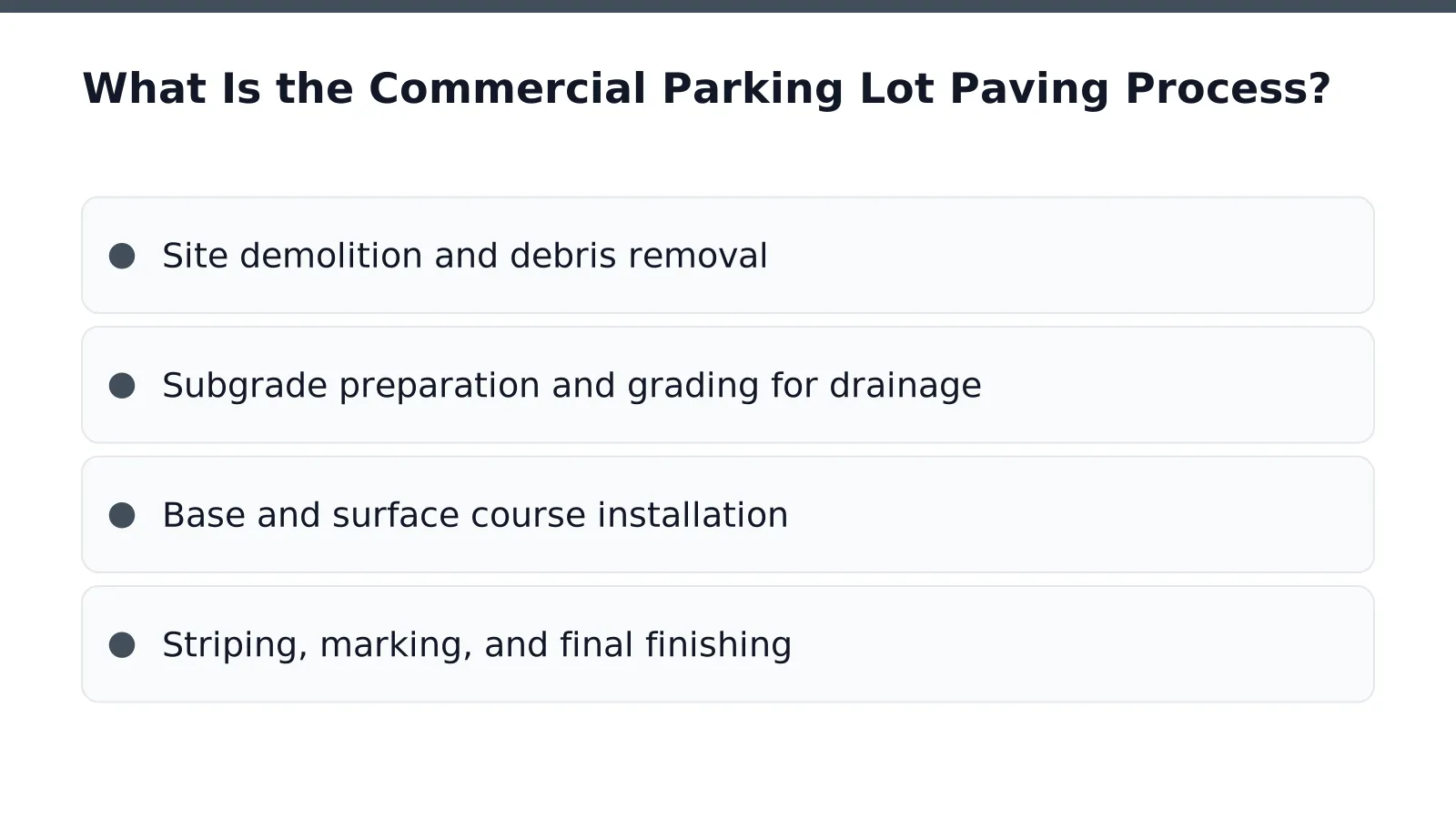
The core commercial paving phases generally include:
- Site demolition and debris removal
- Subgrade preparation and grading for drainage
- Base and surface course installation
- Striping, marking, and final finishing
Contractors offering the complete range of asphalt paving services rely on current equipment, materials, and procedures to execute how commercial parking lots are paved consistently across commercial, residential, and municipal properties alike.
What Happens During Site Assessment and Planning?
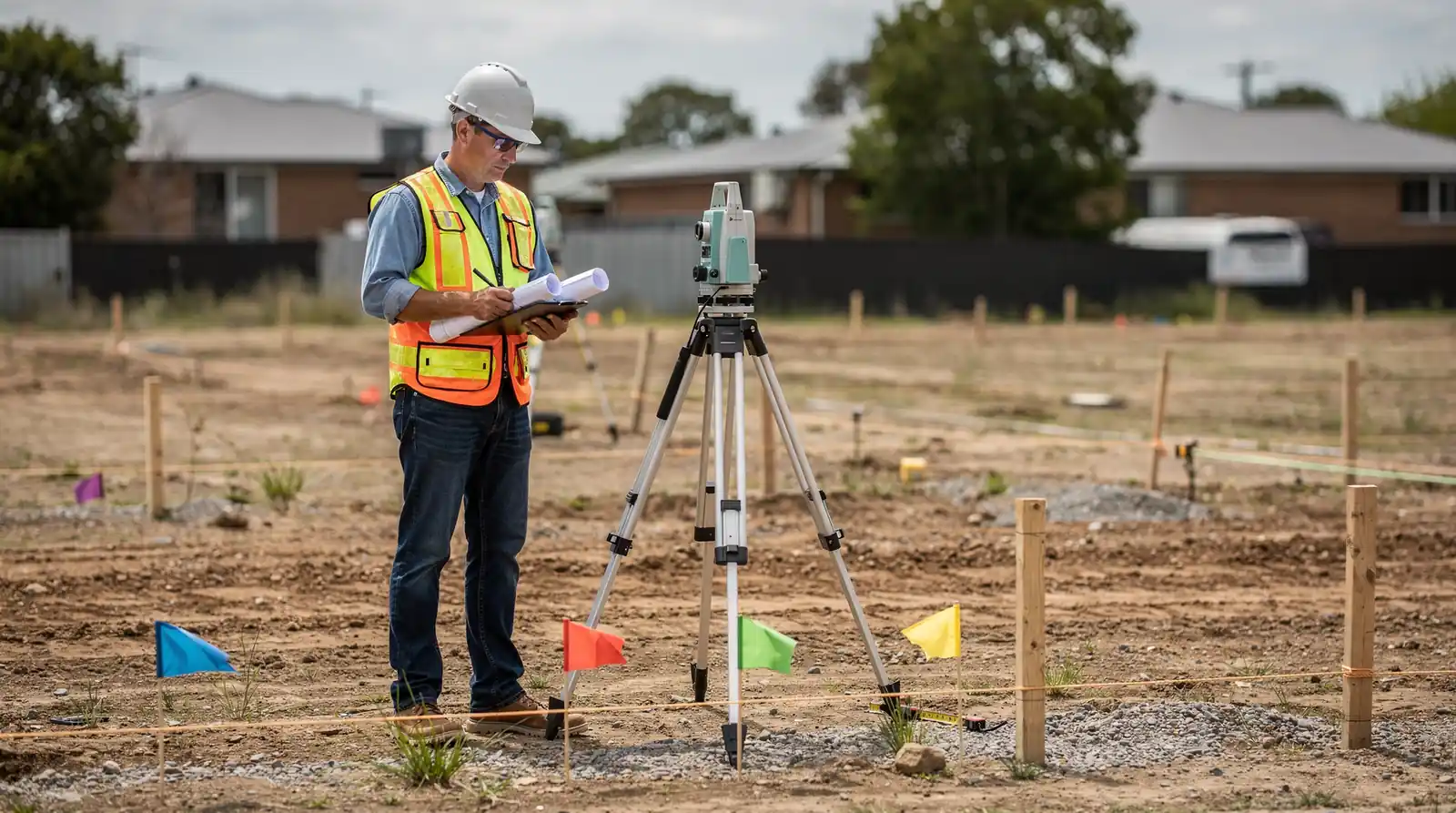
Site assessment and planning mark the starting point of the parking lot paving process, the stage where engineers and contractors evaluate existing sidewalk integrity, drainage patterns, and subgrade conditions before any scope gets defined. Findings from this evaluation translate directly into a detailed project scope, covering square footage, material specifications, and construction sequencing. Skipping this stage creates risk later, since hidden subgrade weaknesses or unnoticed drainage flaws tend to surface mid-project.
Drainage deserves particular attention among the early commercial paving phases. Standing water accelerates sidewalk deterioration and creates operational headaches for property managers, from slick surfaces to ice buildup in colder months. Grading gets evaluated alongside drainage so water moves away from structures and parking areas rather than pooling against curbs or building foundations.
Layout planning happens in parallel with these technical checks. Before construction begins, planners map out:
- Traffic flow patterns for entering and exiting vehicles
- Accessible parking placement and required clearances
- Pedestrian routes separated from vehicle lanes
- Striping layout that supports safe, orderly daily use
Why does drainage planning matter so much for parking lots?
Pooled water does more than inconvenience drivers. It works its way into sidewalk layers and weakens the base beneath the surface. Over repeated freeze-thaw cycles, that trapped moisture expands and contracts, cracking asphalt from the inside out. Proper grading solves this before the first load of material ever arrives.
Sidewalk solutions built for Colorado’s Front Range account for local soil behavior and seasonal temperature swings. Regional climate and soil conditions shape how a parking lot performs over time. Planning that fits commercial, residential, and municipal needs alike helps ensure the finished surface holds up under the specific traffic and weather loads it will face daily.
How Is the Sidewalk Base Constructed?
Base construction forms the structural foundation beneath every parking lot surface, and skipping steps here causes premature cracking and potholes later. Property managers who understand this stage make better decisions when reviewing contractor proposals. Installing a commercial parking lot involves far more than simply laying asphalt or concrete over bare ground. The layers beneath the surface determine how long that surface lasts.
Base and surface work covers a wide range of conditions, not a single fixed process. Scope can range from site preparation and minor repairs up to full new asphalt installation. Conditioning of sidewalk that has reached severe distress. A facility manager overseeing a cracked, decade-old lot faces a very different scope than one planning a brand-new installation on undeveloped land.
Why Does Soil Type Affect Base Design?
Soil composition changes how a base layer compacts, drains, and bears weight under repeated traffic loads. Regional soil and base knowledge, applied across El Paso, Teller, Douglas, Arapahoe, and Denver counties, shapes how compaction depth and material selection get determined for a given site. A base engineered for sandy, well-draining soil performs differently than one built over dense clay.
Does Colorado’s Climate Change How the Base Is Built?
Freeze-thaw cycles and seasonal moisture shifts stress a sidewalk base in ways warmer climates never see. A local Colorado Springs business understands the region’s unique climate. Sidewalk challenges that influence base performance, from frost heave to drainage timing. Builders account for these cycles by:
- Selecting aggregate that resists moisture retention
- Grading for positive drainage away from the base
- Compacting to depths suited for regional freeze patterns
These regional adjustments separate a base built to last from one that fails within a few seasons.
What Are the Core Commercial Paving Phases?
Five distinct stages define commercial parking lot construction: site assessment, excavation or milling, base construction, binder and surface course paving, and line striping. Each phase builds on the one before it, so skipping a step or rushing the timeline weakens the finished surface. Property managers who understand this sequence can better evaluate contractor proposals and spot shortcuts before they become expensive problems.
Site assessment comes first. Crews examine soil conditions, drainage patterns, and existing sidewalk before any equipment moves onto the lot. Excavation or milling follows, removing old asphalt or unsuitable soil to create a clean, stable starting point. Base construction then establishes the structural layer that carries traffic weight and resists shifting underneath the surface.
What happens during binder and surface course paving?
Binder course paving lays down a thicker, load-bearing asphalt layer that distributes vehicle weight across the base. The surface course follows as a thinner, smoother top layer designed for durability and a clean finished appearance. Together these layers determine how well a lot withstands heavy trucks, repeated braking, and seasonal temperature swings.
Why does line striping come last?
Striping happens only after paving materials cure properly, since fresh asphalt needs time to set before accepting paint. This final phase defines traffic flow, parking stall boundaries, and accessibility markings. Skipping proper cure time risks premature line fading or peeling.
Parking Lot Experts coordinates each of these phases for commercial properties across Colorado Springs, Manitou Springs, Fountain, Monument, Woodland Park, Castle Rock, and Denver. Services spanning the full project, including asphalt paving, concrete paving, sealcoating, striping, crack repair, and site preparation, are managed from the ground up so property owners throughout Colorado Springs, Denver, and the surrounding areas see consistent results at every stage.
How Are Projects Phased to Keep Lots Open?
Phasing divides a commercial lot into sections so paving crews finish one zone while the rest of the property stays open to traffic. Each sidewalk section gets engineered for the actual vehicle loads the lot carries. That load analysis shapes how the parking lot paving process breaks into stages. Heavier truck traffic near loading docks typically calls for a different sequence than a standard customer parking row.
A tailored approach matters because no two properties share the same layout, traffic pattern, or budget. Parking Lot Experts’ hands-on approach allows commercial paving process steps to be shaped around the specific needs. Financial constraints of each property, rather than applying one template to every job. That flexibility carries into phasing decisions, which shift depending on whether the property hosts retail traffic, residential parking, or municipal fleet vehicles.
Does the type of client affect how phases are planned?
Yes. Phasing accounts for whether the operation is commercial, residential, or municipal, since each carries different access needs and compliance considerations. A municipal lot serving a government building, for instance, may require different closure windows than a retail plaza.
Scheduling also shapes how commercial paving phases line up with daily operations. Work windows generally align with standard business hours, Monday through Friday from 8 a.m. to 4 p.m., which helps property managers anticipate when crews stay active on site.
Common phase categories include:
- Site assessment and layout: mapping traffic zones before paving starts
- Section-by-section paving: closing one area while adjacent sections stay open
- Load-specific base work: reinforcing zones that carry heavier vehicle traffic
- Final transition: reopening finished sections as remaining work continues
This staged structure explains how commercial parking lots are paved without forcing a full property shutdown.
How Long Does a Commercial Paving Project Take?
Timelines depend on project size and scope; contact the brand directly for more information. Each phase, demolition, grading, base installation, and asphalt placement, adds its own chunk of time to the overall schedule.
Property managers often assume paving means one continuous workday. The parking lot paving process unfolds in stages, with curing time built between several of them. A small repair job skips most of these stages entirely. A full reconstruction does not.
How does lot size affect the schedule?
Size drives most of the variation in project length. Project timelines vary based on size and scope; contact the brand for more information.
What slows down a paving timeline?
Scope is the biggest factor, followed by how many commercial paving process steps the project requires. New construction demands more phases than a simple repave. Base work and grading take longer than resurfacing an existing structure. Understanding the commercial paving phases involved helps property managers set realistic expectations before work begins.
Facility managers planning projects in Colorado Springs, Denver, and surrounding areas can get timeline-specific answers before committing to a schedule. Here’s how property managers typically plan around scope:
- Small repaves: three to five days for demolition, patching, and resurfacing
- Large lots or new builds: two or more weeks across all phases
- Phase-by-phase pacing: grading and base work extend timelines beyond simple overlays
Those evaluating how commercial parking lots are paved on their property can call Parking Lot Experts at +1 719-465-6690 to discuss scheduling specifics.
What Happens After Paving Is Finished?
Fresh asphalt is not the final step. A parking lot that has been thoughtfully planned, correctly installed, and properly maintained continues to pay dividends long after the crew packs up, enhancing customer experience, improving safety, and protecting property value over time.
Weather and daily traffic start working against the surface almost immediately. Sun exposure, temperature swings, and the constant weight of vehicles cause even newly laid asphalt to show signs of wear eventually. Left unaddressed, those small signs of fatigue turn into cracks, then potholes, then costly structural repairs.
Why Does Fresh Sidewalk Need Follow-Up Treatment?
New asphalt benefits from protective treatments that slow down surface wear before it accelerates. One widely used option is slurry seal, a mixture applied over the finished surface to guard against sun and moisture damage. Once applied, slurry seal creates a smooth, durable, skid-resistant layer that restores the sidewalk’s appearance and renews its performance.
Is Slurry Seal Worth Scheduling Early?
Scheduling protective treatment early tends to save money down the road. Slurry seal offers a cost-effective way to protect. Renew sidewalk before more expensive repairs become necessary, making it a practical line item in any long-term maintenance plan.
Post-paving care generally includes:
- Monitoring the surface for early signs of cracking or raveling
- Applying protective seal treatments on a planned schedule rather than waiting for visible damage
- Keeping drainage clear so standing water doesn’t accelerate deterioration
- Using premium materials and professional application techniques for a consistent, long-lasting finish
Parking Lot Experts applies this same philosophy to post-installation care, treating the paving job as the beginning of a maintenance relationship rather than a one-time transaction. Consistent follow-up protects the investment made during construction and keeps the lot performing well for years.
How Should Repair, Resurface, or Replace Be Decided?
Sidewalk condition, drainage performance, and base stability should drive the repair-resurface-replace decision, not surface appearance. A lot can look rough with faded striping or minor cracking yet still have a sound base underneath. Conversely, a freshly sealed surface can hide failing soil beneath it. Property managers who judge only by looks risk choosing the wrong fix and paying for it twice.
What’s the difference between repairing and resurfacing a parking lot?
Repair addresses isolated problems: potholes, localized cracking, small areas of settling. Resurfacing adds a new layer across the entire surface. Works best when the base below remains stable but the top layer has worn down. Replacement removes everything down to the subgrade and rebuilds from the ground up, which becomes necessary once drainage problems or base failure spread across large sections of the lot.
How does drainage factor into the decision?
Standing water signals trouble beneath the surface, not just on top of it. Poor drainage accelerates deterioration. A lot with persistent puddling may need more than a patch, even if the asphalt itself looks intact. Grading and drainage checks should happen before any paving decision gets finalized.
A simple way to frame the choice:
| Condition Observed | Likely Path |
|---|---|
| Minor, isolated cracking or potholes | Repair |
| Worn surface, stable base, no drainage issues | Resurface |
| Widespread base failure, chronic standing water | Replace |
Parking Lot Experts, based in Colorado Springs, CO, brings local sidewalk experience to this evaluation, since regional soil and climate conditions influence how quickly a base deteriorates. Serving the Colorado Springs community directly informs how these recommendations get made. A hands-on approach lets the repair-versus-replacement call get tailored to each property’s specific needs and budget, rather than applying a one-size-fits-all formula. That individualized review of the parking lot paving process, from base condition to drainage patterns, protects the long-term investment far better than a decision based on surface appearance alone.
FAQ
What are the main phases of a commercial parking lot paving process?
The process includes site demolition and debris removal, subgrade preparation and grading for drainage, base and surface course installation, and finishing work such as striping and marking.
Why does the order of paving phases matter?
Each phase depends on the one before it. A base that isn’t graded correctly undermines even high-quality surface material placed on top of it.
What occurs during the site assessment stage?
Parking Lot Experts evaluates sidewalk integrity, drainage patterns, and subgrade conditions before defining the project scope, covering square footage, materials, and construction sequencing for Colorado Springs and Denver properties.
Conclusion
In closing, understanding the commercial parking lot paving process empowers property managers to make informed decisions that protect their investment and enhance their property’s value. From initial assessment through final inspection, each phase demands professional expertise and attention to detail. By partnering with experienced sidewalk specialists who prioritize quality and transparency, you secure a durable solution built to withstand Colorado’s demanding climate and heavy traffic demands. Your parking lot represents a significant asset, treating it with the care it deserves ensures years of reliable performance and satisfied tenants.

