


Commercial asphalt parking lots in Colorado typically last 8 to 12 years without maintenance. Proper care can extend their lifespan to 15 to 25 years. Freeze-thaw cycles, intense sunlight, and heavy traffic accelerate deterioration. Routine sealing, timely crack repair, and professional slurry seal applications protect surfaces, delay costly reconstruction, and preserve long-term sidewalk value for property managers and facility teams.
Key Takeaways
- Colorado asphalt parking lots typically show significant wear within 8–12 years without proper maintenance and protection.
- Freeze-thaw cycles, intense sunlight, and temperature swings significantly reduce sidewalk lifespan in Colorado’s climate.
- Professional installation and regular maintenance extend commercial parking lot durability across Colorado Springs and Denver areas.
- Contact Parking Lot Experts at 719-465-6690 for expert sidewalk assessment and longevity solutions.
What Defines Commercial Parking Lot Lifespan In Colorado?
Commercial asphalt functions as a layered system: a binder course, graded aggregate, and a prepared base, each working together to carry traffic loads. Under normal conditions, this structure delivers between 15 and 30 years of service life, defining commercial parking lot life expectancy across most Colorado properties. That range, however, is a ceiling, not a guarantee.
Actual parking lot lifespan colorado property managers can expect depends on how several forces interact over time rather than any single factor acting alone. Climate, traffic volume, structural design, maintenance frequency, and installation quality all push and pull against the sidewalk’s deterioration curve simultaneously. A lot built on a thin base course, for example, fails years earlier than one engineered with adequate depth for its traffic load.
Key variables influencing how long does commercial asphalt last include:
- Climate exposure: temperature swings and moisture cycles stress the sidewalk surface and subsurface.
- Traffic load: delivery trucks and heavy vehicles accelerate wear compared to standard passenger traffic.
- Structural design: base depth and drainage planning determine how well the lot resists cracking.
- Maintenance schedule: sealing and crack repair intervals slow deterioration before it compounds.
- Installation quality: proper compaction and material mix set the baseline for everything that follows.
How does freeze-thaw cycling affect sidewalk durability?
Colorado’s freeze-thaw pattern drives much of the state’s freeze thaw parking lot durability concern. Water infiltrates small cracks, freezes, expands, and widens those cracks with each cycle. Left unaddressed, this repeated expansion fractures the surface layer and eventually compromises the base beneath it.
Parking Lot Experts serves commercial, residential, and municipal clients and provides treatments, including slurry seal applications, designed specifically to extend the life, performance, and appearance of commercial asphalt surfaces. Property managers evaluating the condition of an existing lot can contact the team to better understand available options.
How Long Does Commercial Asphalt Last In Colorado?
Commercial parking lot life expectancy in Colorado typically falls between 15 and 25 years, though traffic volume, drainage design, and installation quality shift that range significantly. Property managers asking how long does commercial asphalt last should understand that this figure represents a ceiling, not a guarantee. Poor site prep or neglected maintenance can cut that lifespan dramatically.
Colorado’s climate adds pressure that many other states never face. Sun exposure, rapid freeze-thaw swings, and heavy snow loads all stress sidewalk surfaces year-round. Without engineered drainage and proper base compaction, deterioration accelerates fast.
Why do some Colorado lots fail early?
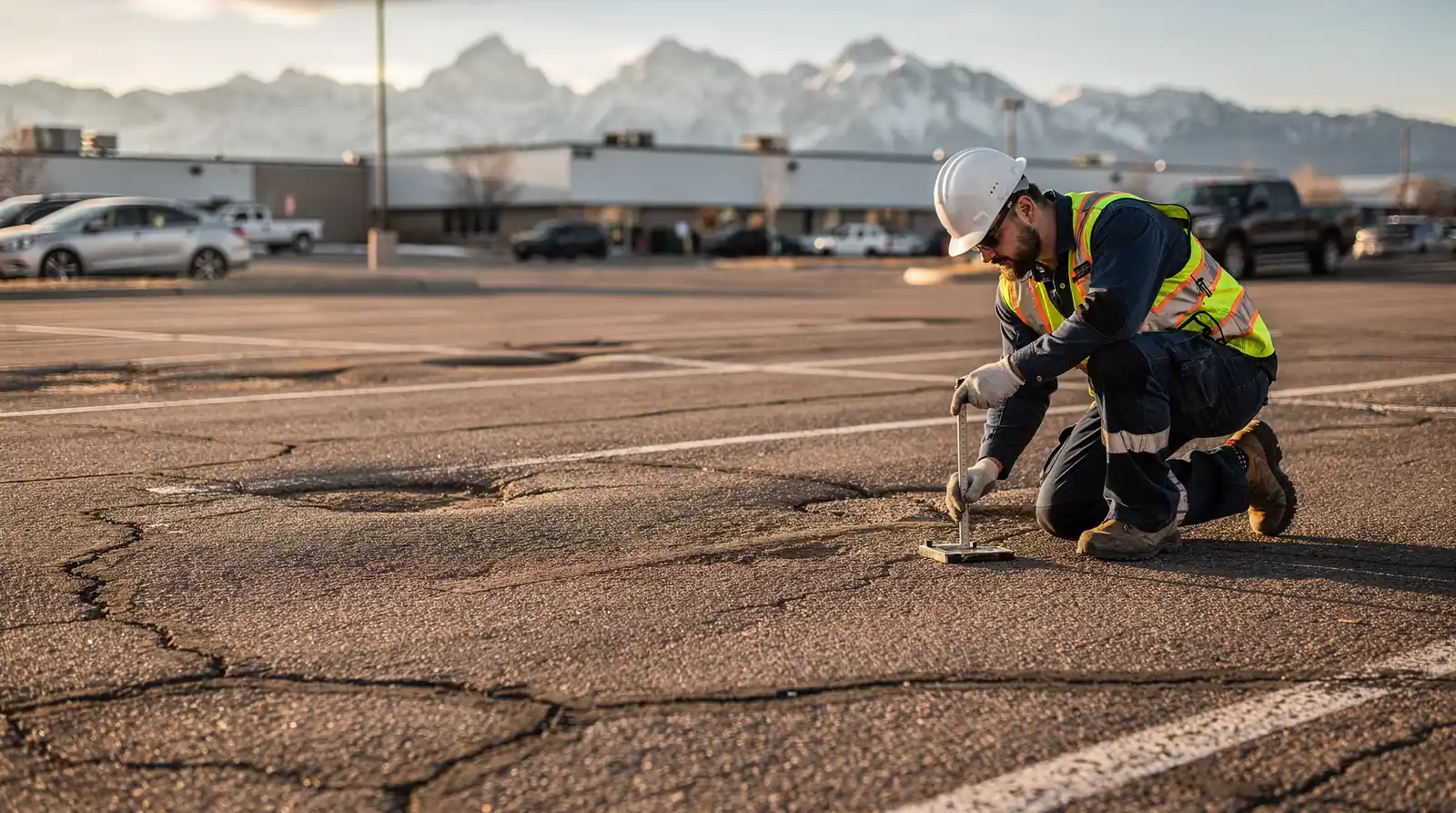
Many Colorado parking lots begin showing serious damage in as little as 8 to 12 years. Cracks spread, potholes form, and whole sections of sidewalk start to fail well before their expected service life ends. This early breakdown usually traces back to design choices made before construction even begins, not to the asphalt material itself.
Can a parking lot really last 25 years?
Yes. A well-engineered lot can reach 20 to 25 years or longer when planning, structural engineering, and preventative maintenance work together from day one. That extended parking lot lifespan colorado property managers hope for depends on decisions made long before paving crews arrive, including subgrade preparation, drainage slope, and material thickness.
Freeze thaw parking lot durability hinges on how well water moves off and away from the sidewalk surface. Repeated freezing and thawing forces water into small cracks, expanding them with each cycle. Facility managers should watch for these warning signs between inspections:
- Spreading hairline cracks along traffic lanes
- Standing water after rain or snowmelt
- Edge cracking near curbs and drains
- Surface raveling or loose aggregate
Serving the Colorado Springs area, Parking Lot Experts supports the full range of services that influence long-term sidewalk performance, including asphalt paving, concrete paving, sealcoating, striping, crack repair, and site preparation. Each of these factors plays a direct role in whether a commercial lot reaches its full service life.
How Does Freeze-Thaw Affect Parking Lot Durability?
Freeze-thaw cycling damages sidewalk when water seeps into small cracks, freezes, expands, and widens those cracks with each cycle. Colorado properties face this stress more than most. Intense sunlight, repeated freeze-thaw swings, heavy snow, and sudden temperature drops combine to put more strain on asphalt than sidewalk experiences in many other parts of the country.
Facility managers in Denver see a related pattern. Freeze-thaw cycles there pair with dry summers. Sudden spring hailstorms, conditions that are difficult on both asphalt and concrete surfaces. Over time, this combination accelerates surface wear, raises freeze thaw parking lot durability concerns, and shortens the window before repairs become necessary.
Why does freeze-thaw damage happen faster in Colorado than elsewhere?
Colorado’s climate delivers several stress factors at once rather than one at a time. Strong UV exposure dries out asphalt binder. Rapid temperature swings between day and night cause the surface to expand and contract repeatedly. Add snowmelt and repeated freezing, and small surface cracks turn into larger structural problems faster than in milder climates.
What protects a parking lot from freeze-thaw damage?
Design and installation quality matter more than the asphalt mix alone. Properly engineered surfaces, built with attention to drainage, base preparation, and material selection, are designed to withstand Colorado’s changing climate and heavy traffic conditions. Sidewalk engineered this way resists water infiltration, the root cause of most freeze-thaw cracking.
Key factors that influence freeze-thaw resistance include:
- Drainage design that moves water away from the surface before it pools and seeps into cracks
- Base compaction quality, since a weak base allows more movement under freeze-thaw pressure
- Material selection suited to temperature extremes rather than generic asphalt blends
- Regular crack sealing before winter to limit water intrusion
Working with a paving provider familiar with regional climate challenges helps property managers anticipate these risks rather than react to them after damage appears.
What Factors Shape Commercial Parking Lot Life Expectancy?
Climate, installation quality, and material choice determine commercial parking lot life expectancy more than any single factor acting alone. Across Colorado, freeze-thaw cycles, intense UV exposure, and heavy traffic loads combine to stress sidewalk in ways that few other regions experience. Soil composition and drainage design matter just as much. Water trapped beneath a surface accelerates cracking long before traffic volume becomes the issue.
Material selection sets the baseline for how long commercial asphalt lasts and how concrete compares. Well-installed asphalt in the Denver area typically holds up for 15 to 20 years. Properly placed concrete can stretch to 30 years or beyond. Those figures only hold true when installation follows sound engineering practice from the first day of construction.
What makes freeze-thaw cycles so damaging to sidewalk?
Water seeps into small cracks, freezes, expands, and widens those cracks with every cycle. Colorado’s rapid temperature swings mean this process repeats dozens of times each winter, not once or twice. Over several seasons, this repeated expansion undermines the base layer and shortens the freeze-thaw durability of a parking lot considerably.
Several variables consistently influence how long a lot performs before major repair becomes necessary:
- Base preparation: compacted, well-drained bases resist frost heave
- Material grade: asphalt mix and concrete strength suited to local climate
- Drainage design: proper slope and runoff control prevent water intrusion
- Traffic load: delivery trucks and heavy vehicles accelerate wear
- Maintenance timing: sealing and crack repair performed before damage spreads
Quality sidewalk in the Denver area reaches 15 to 30 years of service when installation is handled correctly and matched to local conditions. Sidewalk designed specifically for the climate. Soil of the Pikes Peak region tends to outperform generic installations by a wide margin. Firms based in Colorado Springs bring direct, firsthand familiarity with these regional pressures, which shapes parking lot lifespan across Colorado properties far more reliably than a one-size-fits-all approach.
How Do Denver And Colorado Springs Climates Compare?
Denver and Colorado Springs share the same high-altitude freeze-thaw pattern. Local terrain and storm exposure shift how sidewalk wears in each city. Both regions sit along the Front Range, where temperatures swing widely within a single day. That daily swing, not just winter cold, drives most of the structural stress asphalt surfaces face statewide.
Freeze-thaw parking lot durability depends on how often water penetrates sidewalk cracks and refreezes, expanding and weakening the surface below. Denver adds another variable: sudden spring hailstorms that strike parking lots and driveways with little warning. A lot near a shopping center or a residential driveway in a Denver neighborhood faces this compound stress: freeze-thaw cycling layered with impact damage from hail. Colorado Springs experiences fewer hail events but similar freeze-thaw frequency, along with intense high-altitude sunlight that accelerates surface oxidation.
Does location within Colorado affect sidewalk wear?
Yes. Communities across El Paso, Teller, Douglas, Arapahoe, and Denver counties share climate-driven sidewalk challenges. Elevation and storm patterns vary by town. Colorado Springs, Manitou Springs, Fountain, Monument, Woodland Park, and Castle Rock each sit at different elevations, which affects how quickly temperature swings reach the sidewalk base.
Why does regional coverage matter for sidewalk planning?
Property managers overseeing sites across multiple counties benefit from providers familiar with each area’s specific exposure. Parking Lot Experts serves Colorado Springs, Denver, and the surrounding areas, giving facility managers a single point of contact across varied climate zones. Understanding these regional differences helps property owners anticipate maintenance timing rather than react to damage after it appears.
Which Design Choices Extend Colorado Sidewalk Lifespan?
Design decisions made before any equipment reaches a Colorado Springs or Denver property determine most of a parking lot’s eventual service life. Choices about base preparation, drainage, and material thickness happen on paper first, long before a single truck arrives on site. Skipping that planning stage creates problems no amount of later maintenance can fully reverse.
Quality construction practices form the foundation of commercial parking lot life expectancy. A parking lot, private roadway, or driveway installed without proper attention to grading and compaction starts losing structural integrity almost immediately, regardless of how good the asphalt mix looks on day one. Durability and long-term value depend on getting these fundamentals right from the start, not on patching mistakes afterward.
What Makes an Asphalt Installation “Complete”?
A complete installation covers every phase, from site preparation through final surface application, tailored to the specific demands of each property. Grading corrects slope issues that cause water pooling. Base compaction establishes the strength needed to resist freeze-thaw cycling. Surface finishing then locks in the protective layer that drivers and pedestrians actually see and use daily.
Property managers evaluating a contractor’s process should expect each phase addressed individually, not bundled into a rushed, one-size-fits-all approach.
Why Does Professional Installation Matter for Commercial Properties?
A professionally installed asphalt surface improves curb appeal, strengthens safety for pedestrians and vehicles, and delivers lasting performance for commercial properties. These benefits compound over time. A well-designed lot resists cracking longer, sheds water more effectively, and requires less emergency repair work.
Key design factors that influence longevity include:
- Base thickness and compaction, which resist freeze-thaw heaving
- Drainage slope, which prevents standing water from infiltrating the surface
- Material selection, matched to expected traffic loads
- Edge and joint detailing, which reduces early-stage cracking
Parking Lot Experts approaches each project with these variables in mind, recognizing that long-term sidewalk health starts well before paving begins.
How Does Maintenance Impact Parking Lot Lifespan?
Maintenance schedules decide whether a lot re
When Should Property Managers Plan For Repaving?
Property managers should begin repaving planning once surface cracking, drainage issues, or structural fatigue appear across more than a small fraction of the lot. Waiting until failure becomes visible across the full surface shortens commercial parking lot life expectancy. Forces reactive, costlier replacement rather than planned capital budgeting. Colorado’s freeze-thaw cycles accelerate this timeline, making early planning essential for facility managers overseeing retail centers, office parks, and multifamily properties.
Freeze thaw parking lot durability depends heavily on how water moves through the sidewalk structure. Moisture that seeps into small cracks expands during freezing nights and contracts during sunny Colorado afternoons, widening damage with every cycle. Properties that skip early repairs often see small cracks evolve into potholes within one or two winters.
What Signs Indicate a Parking Lot Needs Repaving?
Several warning signs tell property managers that replacement planning should start now rather than later:
- Alligator cracking covering large sections of drive lanes
- Potholes reappearing shortly after patching
- Standing water that doesn’t drain within hours
- Base failure visible as sinking or rutting under heavy vehicles
Spotting these signs early protects parking lot lifespan Colorado property owners depend on for safe, functional sidewalk.
Does Maintenance Timing Change the Repaving Schedule?
Maintenance timing shifts the repaving schedule significantly. Installation quality, timely repairs, and ongoing upkeep are designed to maximize asphalt’s durability and push replacement further into the future. A professionally installed surface also preserves a property’s appearance, functionality, and value, delaying costly capital projects.
Understanding what separates short-lived sidewalk from long-lasting sidewalk can save property owners hundreds of thousands of dollars or more over time. Experienced installation teams delivering proper engine
FAQ
How long does a commercial parking lot last in Colorado?
Commercial asphalt parking lots in Colorado typically last 8 to 12 years before serious cracks, potholes, and structural failures emerge. Proper design, installation, and maintenance significantly extend that timeline toward 15 to 25 years.
What causes Colorado parking lots to deteriorate faster?
Freeze-thaw cycles, intense sunlight, and temperature swings stress the pavement surface as water infiltrates cracks, freezes, expands, and widens those cracks, eventually compromising the base beneath the surface layer.
How can property managers extend their parking lot’s lifespan?
Routine sealing, timely crack repair, and professional slurry seal applications protect surfaces and delay costly reconstruction. Parking Lot Experts offers these treatments and can be reached at 719-465-6690.

