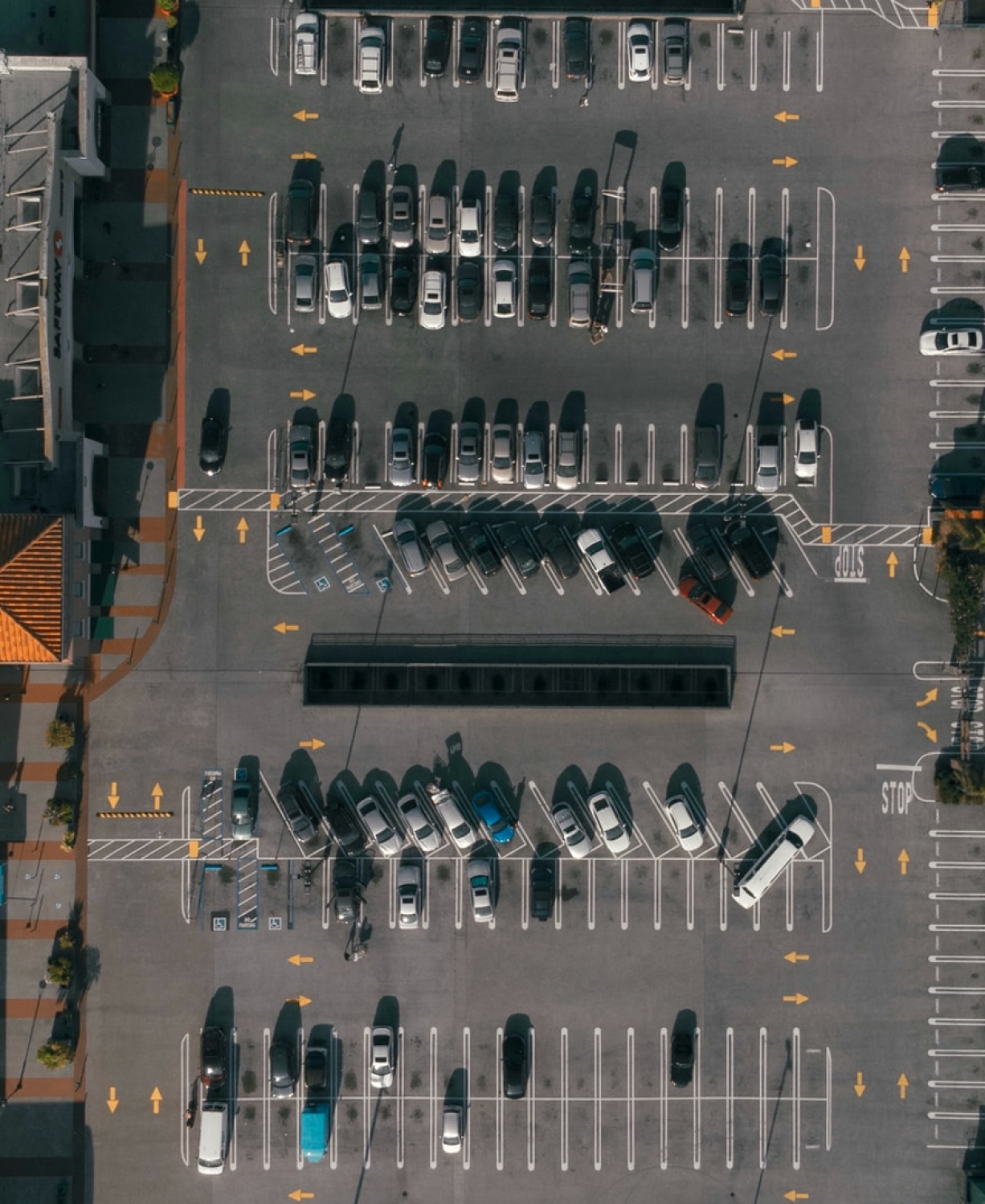
Full reconstruction removes and rebuilds the entire sidewalk section, while milling and overlay strips only the top 1.5 to 3 inches of deteriorated asphalt before laying fresh hot-mix asphalt. Overlay work typically costs $1 to $3 per square foot and adds 8 to 15 years of service life, making it the practical choice for pavements with a stable base.
Key Takeaways
- Asphalt milling and overlay costs $1 to $3 per square foot and extends sidewalk life 8 to 15 years.
- Mill and overlay removes deteriorated asphalt layers 1.5 to 3 inches deep before applying fresh hot-mix asphalt.
- Full reconstruction replaces entire sidewalk structure, requiring complete removal and new base installation for severely damaged lots.
- Parking Lot Experts serves Colorado Springs, Denver, and surrounding areas to help clients choose the right renovation method.
What Is Parking Lot Renovation?
Parking lot renovation describes the range of repair and rebuilding work a property undergoes once everyday wear outpaces simple upkeep. Cracks widen, potholes deepen, and drainage patterns shift. At that point, a basic sealcoat no longer solves the problem, and owners must choose a repair method matched to the sidewalk’s condition.
Renovation is not one fixed procedure. It spans a spectrum of options, from light surface treatments all the way to tearing out and rebuilding a lot from the base up.
Where does resurfacing fit into renovation?
Resurfacing occupies the middle tier of that spectrum, sitting between sealcoating on one end and full replacement on the other. Property managers often reach for resurfacing when cracking. Surface damage have outgrown a simple seal coat but have not yet compromised the base layers underneath.
No parking lot avoids this cycle forever. Traffic volume, freeze-thaw cycles, and age push every surface toward the point where repair becomes necessary rather than optional.
A full renovation plan typically draws from several service categories, including:
- Asphalt paving
- Concrete paving
- Sealcoating
- Striping
- Crack repair
- Site preparation
Parking Lot Experts provides each of these services as part of comprehensive renovation projects.
Who typically needs parking lot renovation services?
Renovation needs cross property types rather than sticking to one category. Commercial property owners managing retail or office lots, residential communities with shared parking areas, and municipal agencies overseeing public lots all face the same underlying issue: sidewalk that ages and eventually demands attention. Parking Lot Experts serves all three groups, tailoring the scope of work to each lot’s traffic load, age, and existing damage. The right renovation approach depends less on who owns the lot and more on how far its deterioration has progressed.
What Signs Indicate A Parking Lot Needs Renovation?
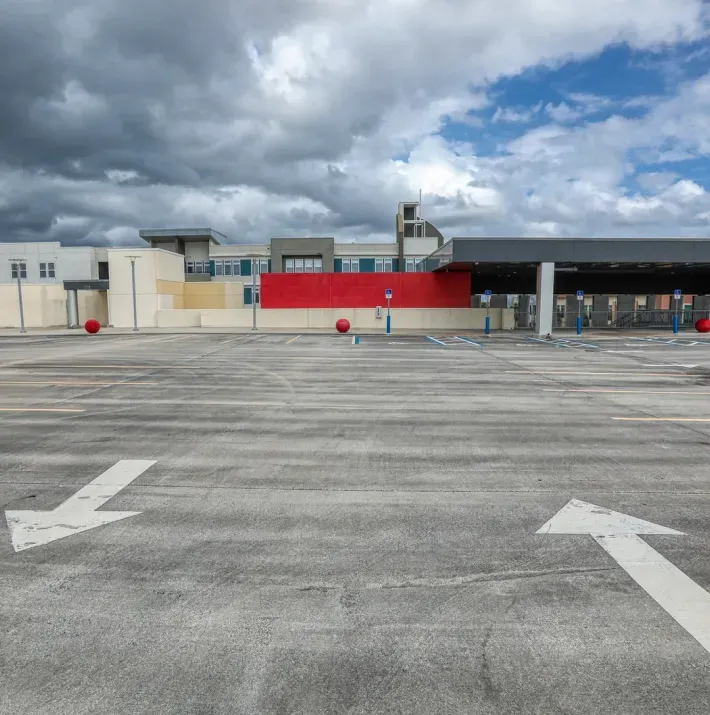
Deepening potholes and widening cracks mark the clearest signal that a parking lot has moved beyond routine maintenance. Once damage reaches this stage, the surface has surpassed what a simple sealcoat treatment can repair. Facility managers watching for these warning signs can avoid costlier emergency repairs down the road.
Sun exposure, seasonal weather cycles, and daily vehicle traffic wear down asphalt steadily, even on surfaces built with quality materials. Over years of use, these forces create surface oxidation, fading, and small cracks that eventually widen into structural problems. Traffic and weather exposure remain the two primary drivers behind this gradual breakdown, and recognizing the pattern early separates minor upkeep from full parking lot renovation.
How Do Property Managers Know Resurfacing Is Enough?
Resurfacing works when damage stays confined to the top layer rather than the base beneath it. The process removes 1.5 to 3 inches of deteriorated asphalt before fresh hot-mix material goes down, restoring a stable, even surface without rebuilding the entire lot.
What Separates Minor Wear From A Full Reconstruction Need?
Deciding between parking lot reconstruction vs resurfacing comes down to depth of damage. Surface-level cracking and fading point toward resurfacing, while deep structural failure signals reconstruction.
Common signs worth tracking include:
- Potholes that return after patching
- Cracks wider than a quarter inch, often spreading in networks
- Faded, chalky asphalt lacking its original dark finish
- Standing water pooling after rain due to poor drainage
- Crumbling edges or raised sections near curbs
Property managers weighing an asphalt overlay vs replacement decision, or researching milling and overlay cost Colorado property owners typically face, benefit from identifying these signs early before damage spreads further.
What Is The Difference Between Milling And Overlay?
Milling removes the damaged surface layer. Overlay replaces it with fresh asphalt, and together the two steps form a single rehabilitation process. This combined technique counts as a surface-focused repair, not a full structural rebuild. For property managers weighing a parking lot renovation, understanding that distinction matters: a surface fix solves surface problems. It won’t correct issues buried deeper in the base.
The milling phase uses machinery to grind away a set depth of old sidewalk, usually just the top layer showing cracking, rutting, or wear. Crews then clear the debris and prepare a clean, even base. Fresh asphalt goes down over that base during the overlay phase, bonding to create a smooth, uniform driving surface.
Does Milling And Overlay Fix Structural Problems?
No. Because the method targets the surface layer only, it won’t repair weak sub-base soil, drainage failures, or deep structural cracking. Lots with those deeper issues typically need asphalt overlay vs replacement comparisons before deciding. Replacement addresses problems milling physically cannot reach.
How Does Milling Prepare The Lot For New Asphalt?
Milling creates a clean, properly graded surface for the new layer to bond to. Removing worn material first also helps maintain consistent curb heights and drainage patterns across the lot.
Facility managers comparing milling and overlay cost Colorado projects against full replacement should weigh sidewalk condition carefully, not just budget. The decision also ties into the broader question of parking lot reconstruction vs resurfacing. Surface rehabilitation and ground-up rebuilds serve different levels of deterioration. Parking Lot Experts applies milling and overlay methods throughout Colorado Springs, Denver, and surrounding communities, drawing on direct, local familiarity with how regional freeze-thaw cycles and traffic loads affect sidewalk condition over time.
How Does Asphalt Overlay Compare To Replacement?
Overlay and replacement solve different problems at different depths. An asphalt overlay mills down the existing surface, applies a tack coat to bond new material, then places fresh asphalt directly on top of the original sidewalk. Full replacement works differently: crews excavate and remove the entire lot, then rebuild the sidewalk from the base up. The gap between these two methods explains why cost, timeline, and long-term performance can vary so widely for a single property.
Choosing between the two often comes down to one question: how much of the original structure is still sound? Overlay preserves a functioning base and simply refreshes the wearing surface. Replacement starts over completely, which addresses problems overlay cannot reach, like a failed subgrade or extensive base cracking.
Which option costs less for a commercial lot?
Overlay generally involves less material and labor than a full rebuild, since the existing base stays in place. Replacement costs more because it requires removing the old sidewalk entirely before rebuilding every layer. Facility managers weighing asphalt overlay vs replacement should treat the condition of the base, not just surface wear, as the deciding factor.
Does overlay last as long as a new lot?
A properly installed surface, whether overlay or full replacement, improves curb appeal, strengthens safety, and delivers lasting performance for commercial properties. Overlay extends the service life of sidewalk that still has a sound foundation underneath it. Resurfacing methods maintain a smooth, durable finish without forcing owners into a full rebuild, which makes overlay the practical middle step before replacement becomes necessary.
| Factor | Asphalt Overlay | Full Replacement |
|---|---|---|
| Process | Mill, tack coat, new surface layer | Excavate, remove, rebuild from base |
| Base condition required | Sound, stable base | Not required; base is rebuilt |
| Scope of work | Surface-level | Full-depth |
Property managers evaluating parking lot renovation options benefit from inspecting the base before committing to either path.
When Is Full Reconstruction Needed Instead Of Resurfacing?
Full reconstruction becomes necessary when the asphalt base itself has failed, not just the surface. A parking lot renovation that only addresses the top layer cannot fix cracked or shifting subgrade underneath. At that point, resurfacing becomes a short-term patch rather than a real fix.
Deciding between asphalt overlay vs replacement comes down to one core question: how deep does the damage go? When sidewalk reaches the end of its useful life, facility managers face a choice between milling-and-overlay work and full-depth replacement. The right answer depends on the condition of the base layer, not just what the surface looks like.
How Do Property Managers Know When The Base Has Failed?
Widespread alligator cracking, potholes that keep returning after repair, and visible sinking or heaving are signs the base has deteriorated beyond resurfacing. Standing water that pools in new spots each season often signals grading or drainage problems rooted below the surface. In those cases, milling and overlaying the top layer leaves the underlying problem untouched.
Is Reconstruction More Expensive Than Resurfacing?
Yes, full reconstruction costs more upfront than resurfacing or overlay work. Understanding milling and overlay cost in Colorado markets helps facility managers compare that investment against the price of excavating and rebuilding a lot from the ground up. The comparison matters most when weighing parking lot reconstruction vs resurfacing for aging commercial properties, since choosing the cheaper short-term option on a failed base often leads to repeat repairs within a few years.
Properly engineered asphalt surfaces, built to handle Colorado’s shifting temperatures and heavy traffic loads, depend on a sound base more than a fresh top coat. Parking Lot Experts serves reconstruction and resurfacing projects across Colorado Springs, Manitou Springs, Fountain, Monument, Woodland Park, Castle Rock, and Denver, along with larger-scale work throughout El Paso, Teller, Douglas, Arapahoe, and Denver counties.
How Much Does Milling And Overlay Cost In Colorado?
Costs for milling and overlay cost colorado projects depend heavily on lot size, asphalt thickness, and the extent of base repair needed before resurfacing begins. Property managers weighing a full parking lot renovation should treat milling. Overlay as a mid-range investment, more involved than sealcoating but far less disruptive than tearing out a lot entirely. The payoff is durability: this resurfacing method adds an estimated 8 to 15 years of additional sidewalk life when installed correctly.
That lifespan projection matters because it changes the math on long-term budgeting. A lot that might otherwise need replacement in a few years can instead stretch its useful life by over a decade, delaying a much larger capital expense. For facility managers juggling multiple properties, that deferred cost can free up budget for other maintenance priorities.
What Affects Pricing for This Type of Project?
Pricing shifts based on surface condition, drainage needs, and how deep the milling has to go before new asphalt goes down. Lots with extensive base damage require more prep work, which raises overall project cost. Climate also plays a role in Colorado specifically. Freeze-thaw cycles stress sidewalk in ways that affect material choices and installation timing.
Who Should Property Managers Contact for a Cost Estimate?
Because every lot’s condition differs, an accurate figure requires a site evaluation rather than a generic quote. Property managers can reach Parking Lot Experts directly by phone at +1 719-465-6690 to discuss project scope and get a cost estimate. The team is available Monday through Friday, 8 a.m. to 4 p.m., for consultations.
Working with a contractor based in Colorado Springs carries a practical advantage beyond convenience. Local crews price and plan projects around the region’s specific climate. Sidewalk challenges, rather than applying a one-size-fits-all approach borrowed from a different climate zone entirely.
How Long Do Renovated Parking Lots Last?
Resurfacing adds eight to 15 years of service life to a deteriorating parking lot surface, depending on traffic volume and climate exposure. That range makes resurfacing one of the more durable mid-tier options available for a parking lot renovation, sitting well above simple patching in terms of longevity. Property managers weighing repair budgets against replacement costs often find this window attractive. It defers the expense of full reconstruction for over a decade in many cases.
Lifespan depends heavily on the renewal method chosen, not just the asphalt itself. A slurry seal, made from asphalt emulsion, fine aggregate, and water, gets blended and spread across the surface as a protective layer. Once cured, the mixture forms a smooth, skid-resistant finish that restores both appearance and performance without the cost of a full mill-and-overlay job.
Does the Type of Material Affect How Long a Renovation Lasts?
Material quality matters as much as the method. Premium materials paired with professional application techniques produce a consistent, long-lasting finish. Lower-grade mixes or rushed installation shorten service life regardless of the renovation type selected. Facility managers should treat material specification as a durability lever, not an afterthought.
Which Lasts Longer, Slurry Seal or Full Resurfacing?
Full resurfacing generally outlasts slurry seal because it replaces a structural layer of asphalt rather than coating the existing surface. Slurry seal works best as a protective, cosmetic renewal for lots that haven’t yet developed structural cracking or deep rutting. Choosing between the two comes down to current sidewalk condition, not simply budget.
| Method | Primary Benefit | Typical Use Case |
|---|---|---|
| Slurry seal | Skid resistance, restored appearance | Lots with surface wear, no structural damage |
| Resurfacing (8-15 yr life) | Added structural life | Lots with cracking, rutting, or base fatigue |
How Should Property Managers Choose The Right Method?
Sidewalk condition, traffic load, and budget timelines determine whether milling-and-overlay or full reconstruction fits a given property. A parking lot renovation plan built on these three factors avoids two costly mistakes: spending on a surface fix that fails within a few years, or tearing out sidewalk that still has structural life left. Decision-makers who understand how these approaches differ sidestep unnecessary spending, unexpected failures, and operational disruptions that interrupt business for tenants and customers alike.
What factors separate overlay from full replacement?
The choice between asphalt overlay vs replacement comes down to what lies beneath the surface. Surface cracking and minor rutting usually respond well to milling and overlay, since the base layer remains sound. Deep structural failure, widespread base deterioration, or persistent drainage problems typically call for full reconstruction instead.
| Condition Observed | Likely Method |
|---|---|
| Surface cracking, minor rutting | Mill and overlay |
| Base failure, chronic drainage issues | Full reconstruction |
| Mixed wear across large lot | Site-specific evaluation |
Does regional climate affect the decision?
Colorado Springs sidewalk contends with freeze-thaw cycles and variable soil conditions tied to the Pikes Peak region. Solutions need to account for that climate and soil behavior rather than apply a one-size-fits-all method. A method that performs reliably in a milder climate may fail faster locally, which is why parking lot reconstruction vs resurfacing decisions benefit from site-specific evaluation rather than assumption.
FAQ
How much does asphalt milling and overlay cost?
Asphalt milling and overlay costs $1 to $3 per square foot and extends sidewalk life by 8 to 15 years. This makes it a practical choice for pavements with a stable base.
What is the difference between reconstruction and overlay?
Full reconstruction removes and rebuilds the entire sidewalk section, while milling and overlay strips only the top 1.5 to 3 inches of deteriorated asphalt. Reconstruction requires complete removal and new base installation for severely damaged lots.
Who does Parking Lot Experts serve?
Parking Lot Experts serves commercial, residential, and municipal clients throughout Colorado Springs, Denver, and surrounding areas. They tailor renovation scope to each lot’s traffic load, age, and existing damage.
Conclusion
In closing, the choice between full reconstruction and asphalt milling with overlay depends on your parking lot’s current condition, budget constraints, and long-term performance goals. Both approaches deliver durable, cost-effective solutions when executed by experienced professionals. Parking Lot Experts evaluates each project individually to recommend the strategy that maximizes your investment and extends sidewalk life. Contact our team to discuss which renovation method best serves your Colorado Springs or Denver property.
Property managers weighing milling and overlay cost Colorado projects should request a site assessment before committing to a method. Facilities serving homeowners, businesses, and commercial operations all face different traffic patterns, and asphalt installation planning should reflect those differences.